
A faulty heat exchanger in a boiler is most often caused by limescale from hard water or black sludge building up inside the unit. These deposits create hotspots, restrict water flow, and eventually lead to overheating, noise, leaks or complete failure. The heat exchanger is the part that transfers heat from the burner to the water that warms your radiators and taps. When it stops working properly you lose reliable heating and hot water.
This guide explains the main causes in plain language and sets out the practical steps that follow for UK homeowners and landlords.
What Causes The Boiler Heat Exchanger to Malfunction?
What causes the boiler heat exchanger to malfunction is usually a combination of hard water minerals, system sludge, and the natural effects of age and limited maintenance. These issues restrict flow, create uneven heating and put the metal under stress until cracks or blockages appear. Below we look at each main cause and the steps that can help.
Limescale Build-Up from Hard Water
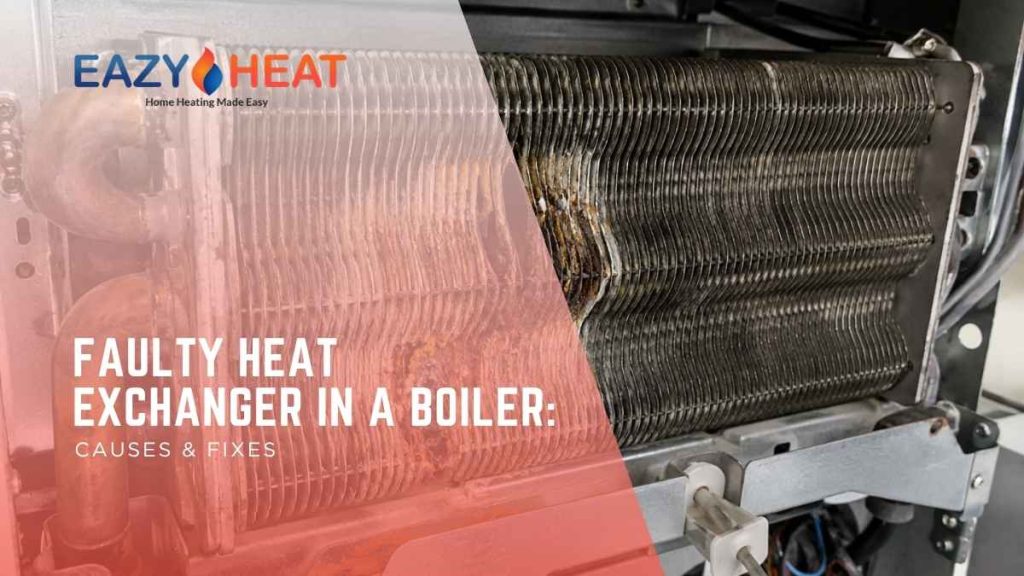
Limescale build-up from hard water is one of the most common reasons for a faulty heat exchanger in a boiler. Many parts of the UK have hard water that carries dissolved minerals. When this water is heated inside the narrow channels of the heat exchanger the minerals settle as a hard, chalky layer.
The scale acts like insulation, so the metal underneath overheats while the water itself takes longer to reach temperature. Over time the hotspots can warp the exchanger or create small cracks. You will often hear a whistling or kettling sound as steam bubbles form against the scale.
How to Fix
- Note any whistling, rumbling or boiling-kettle noises when the boiler fires.
- Check whether hot water temperature fluctuates or takes longer than usual to heat up.
- Turn the boiler off if you suspect a serious problem and call a Gas Safe registered engineer.
- The engineer will inspect the heat exchanger and may attempt a chemical clean or descaling if the build-up is not too advanced.
- In many cases the exchanger will need replacing. Expect total costs in the region of £300 to £800 or more depending on the boiler model and labour rates.
- Ask about fitting a scale reducer or inhibitor and a magnetic filter to protect the new or cleaned exchanger from the same problem returning.
Heating System Sludge and Magnetite
Heating system sludge and magnetite is another leading cause of a faulty heat exchanger. Over years of use the radiators, pipes and other metal parts slowly corrode. The resulting black sludge circulates with the water and settles in the heat exchanger’s narrow passages. Like limescale, the sludge restricts flow and creates hotspots that stress the metal.
Aluminium heat exchangers are especially vulnerable because their channels are fine. Radiators that feel cold at the bottom or water that runs black when you bleed a radiator are classic signs that sludge is present.
How to Fix
- Bleed a couple of radiators and check the colour of the water. Dark or black water points to sludge.
- Note any reduced heat output, unusual noises or repeated lockouts.
- Do not attempt to flush the system yourself. Call a Gas Safe engineer.
- The engineer will usually recommend a power flush to remove the sludge, followed by checking the heat exchanger for damage.
- If the exchanger is already cracked or heavily restricted it will need replacement.
- After cleaning, have a magnetic filter fitted and the system dosed with inhibitor. These steps greatly reduce the chance of the problem returning.
Natural Wear and Tear with Age
Natural wear and tear with age will eventually affect every heat exchanger. Modern units are designed to last many years when the system water is clean and protected, but constant heating and cooling cycles slowly fatigue the metal.
Older boilers that have never had a power flush or inhibitor are more likely to show cracks or leaks. Once the metal is compromised, water can escape inside the boiler casing and appear as drips at the base.
How to Fix
- Look for water collecting under the boiler or a sudden drop in system pressure.
- Switch the boiler off at the isolator if you see leaks and arrange a professional inspection.
- A Gas Safe engineer will open the casing, inspect the exchanger and confirm whether it can be repaired or must be replaced.
- On boilers more than eight to ten years old the cost of a new heat exchanger often makes full boiler replacement the more sensible long-term choice.
- Always check whether the boiler is still under manufacturer warranty, as this can cover the part cost.
- After any work, ensure the system is cleaned and protected to extend the life of the remaining components.
Lack of Maintenance and Missing Protection
Lack of maintenance and missing protection accelerates every other cause of a faulty heat exchanger. Systems that have never been flushed, never received an inhibitor, or that lack a magnetic filter allow sludge and scale to accumulate unchecked.
Annual servicing is the best chance to catch early signs, top up inhibitor and clean filters before serious damage occurs. Properties that skip services for several years are far more likely to face an expensive heat exchanger failure.
How to Fix
- Check your service records. If the boiler has not been serviced in the last twelve months, book a Gas Safe engineer promptly.
- Ask the engineer to test the system water and inspect the heat exchanger during the service.
- If sludge or scale is present, arrange a power flush and the fitting of a magnetic filter.
- Ensure the system is correctly dosed with a quality inhibitor after any cleaning work.
- Schedule annual services going forward so future problems are caught early.
- If the heat exchanger is already damaged, the engineer will advise on repair versus replacement based on the boiler’s age and overall condition.
Boiler problems such as a failing heat exchanger can quickly lead to costly repairs, especially once the part itself needs replacing. Many homeowners and landlords find that investing in a new, efficient boiler saves money over the longer term by cutting running costs and removing the risk of repeated major failures.
Eazy Heat installs new boilers for properties across the UK and can help you compare the numbers for your situation.
When a Faulty Heat Exchanger Points to Replacement
Replacement of a heat exchanger typically costs several hundred pounds once parts and labour are included. On boilers over ten years old, or where other components are also showing wear, the total can approach the price of a modern A-rated unit.
New boilers commonly achieve higher efficiency and can reduce annual gas bills by £200 to £400 compared with older models. For many households the decision becomes clearer once the heat exchanger has failed and the boiler is out of warranty.
Is It Time to Replace Your Boiler?
A faulty heat exchanger can be an expensive repair, particularly when an older boiler is already experiencing other problems. Instead of continuing to invest in major repairs, a new boiler could give your home or rental property more reliable heating, improved efficiency and greater peace of mind.
Our simple online boiler quotation tool makes it easy to find out how much a replacement boiler could cost, with every installation backed by a market-leading 12-year parts and labour warranty. Get your free new boiler quote today and take the hassle out of replacing an ageing boiler.
Frequently Asked Questions
Can a cracked heat exchanger cause carbon monoxide to enter the home?
Yes. A crack can allow combustion gases to mix with the circulating water or escape into the boiler casing. If you smell unusual fumes, see a yellow or distorted burner flame, or if a carbon monoxide alarm sounds, turn the boiler off, ventilate the property and leave the building if necessary. Call the National Gas Emergency Service on 0800 111 999 and arrange a Gas Safe inspection before using the boiler again.
How long does a typical boiler heat exchanger last?
With clean system water, correct inhibitor levels and annual servicing, a modern heat exchanger can last fifteen years or more. In hard water areas or systems with heavy sludge the life can be much shorter.
Is it safe to keep using a boiler that is making a kettling noise?
Kettling is a warning that local overheating is occurring. Continued use can worsen the damage and lead to cracks or lockouts. Have the boiler inspected promptly rather than ignoring the noise.
Will a magnetic filter prevent future heat exchanger problems?
A good magnetic filter captures a large proportion of the iron oxide particles that form sludge. Combined with correct inhibitor dosing and regular servicing it significantly reduces the risk of the heat exchanger becoming restricted again.
Does home insurance usually cover heat exchanger failure?
Most standard home insurance policies treat boiler component failure as wear and tear and do not cover it. Specialist boiler cover or manufacturer warranties are more likely to help, subject to the terms and service history.