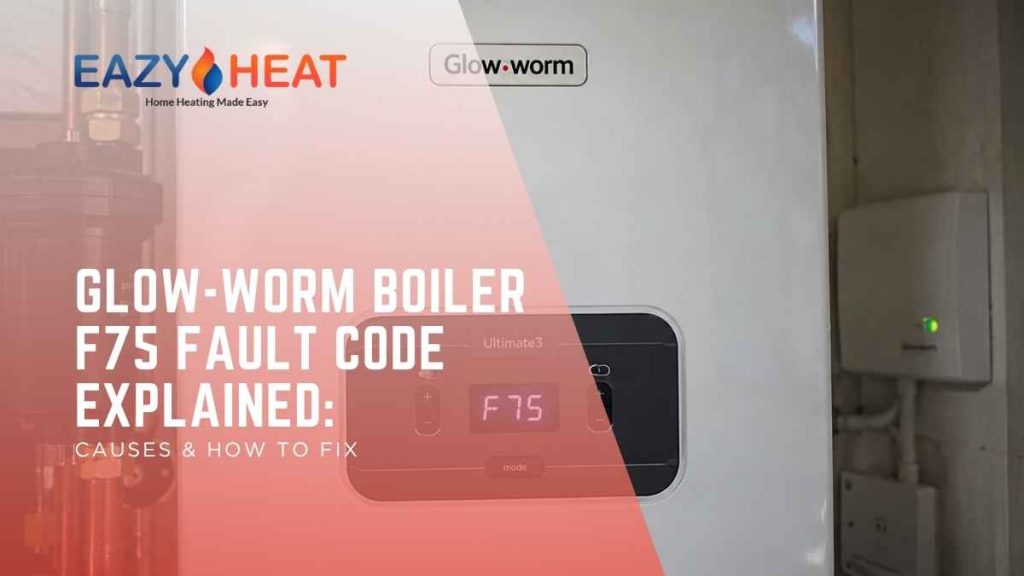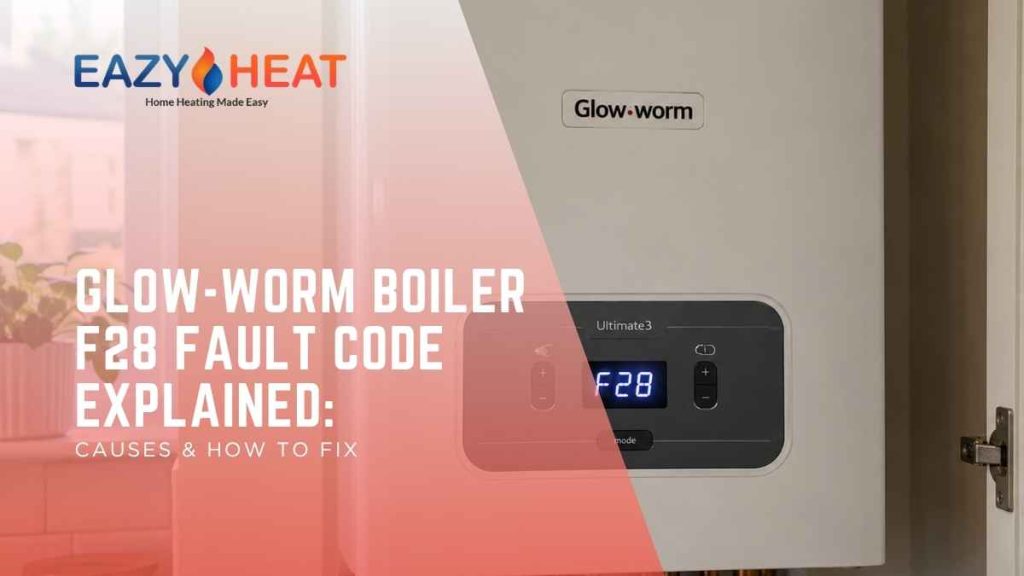

The Glow-Worm boiler F28 fault code means your boiler has tried to light but failed to establish a flame, so it locks out as a safety measure. This leaves you without heating or hot water until the underlying issue is sorted.
It is one of the more common ignition-related error codes on Glow-Worm models (and closely related Vaillant units, since Glow-Worm sits under the Vaillant Group). In the UK, where around three-quarters of homes rely on a gas boiler for central heating, an F28 lockout can disrupt daily life quickly, especially in colder months.
This guide walks you through exactly what the code means, the most frequent causes, practical steps you can take safely, and when it is time to call a Gas Safe registered engineer. We keep everything straightforward so any homeowner or landlord can follow along.
What Does the Glow-Worm Boiler F28 Fault Code Mean?
The Glow-Worm boiler F28 fault code means the boiler has made several unsuccessful attempts to ignite and has locked itself out to prevent unsafe operation. Modern Glow-Worm boilers run a controlled ignition sequence. Gas is released, a spark is generated, and the flame sensor checks that a stable flame has formed. If the flame is not detected after the allowed attempts (usually three), the control board displays F28 and shuts the system down.
You will typically notice no hot water, cold radiators, and sometimes a series of clicks as the boiler tries to light. The code itself does not point to one single part. It simply tells you the ignition process has failed.
Glow-Worm and Vaillant share many of the same fault codes, so the meaning is consistent across both brands. Persistent or recurring F28 codes often signal that a deeper problem is developing, and repeated resets without diagnosis can sometimes mask issues that become more expensive later.
If your boiler is older and the F28 keeps returning, it may be worth weighing the cost of ongoing repairs against the long-term savings of a modern, efficient replacement. Eazy Heat installs new boilers for homeowners and landlords across the UK, helping many households move away from repeated fault codes and rising running costs.
What Causes the F28 Fault Code on Your Glow-Worm Boiler?
Several everyday issues can trigger the F28 fault code on a Glow-Worm boiler. The most frequent involve problems with the gas supply, a frozen condensate pipe in cold weather, a blocked flue, or worn ignition components. Less commonly the gas valve, spark generator, burner debris or the printed circuit board can be responsible. Below we look at each main cause in turn and the practical steps that follow.
Gas Supply Problems
Gas supply problems are one of the most common reasons for the F28 fault code. The boiler simply does not receive enough gas (or any gas at all) to create a flame.
This can happen if the prepayment meter has run out of credit, the main gas supply has been interrupted, the external regulator is frozen in very cold weather, or there is low gas pressure at the property. Newer, higher-output boilers sometimes reveal that the existing gas pipework cannot deliver the volume of gas required. Air pockets in the gas line after work on the network can also starve the burner temporarily.
How to Fix
- Check whether other gas appliances in the home (hob, gas fire, or oven) are working normally. If none of them light, the issue is almost certainly with the supply rather than the boiler.
- If you have a prepayment meter, top it up and wait a few minutes for the supply to restore.
- Confirm the gas isolation valve next to the boiler is fully open (usually parallel to the pipe).
- In freezing conditions, look at the external gas meter and regulator for signs of ice and gently warm the area if safe to do so.
- Once the supply is confirmed, reset the boiler according to the manufacturer’s instructions (usually hold the reset button for 3–5 seconds) and watch for a successful light-up.
- If the F28 returns immediately or other appliances work but the boiler still fails, contact a Gas Safe engineer. They can measure gas pressure at the boiler and check for restrictions in the pipework.
Frozen or Blocked Condensate Pipe
A frozen or blocked condensate pipe is especially common in UK winters and frequently triggers the F28 error code. Condensing boilers produce acidic water as a by-product of efficient combustion. This water drains away through a plastic pipe that usually exits the wall and runs to an external drain or soil stack. When temperatures drop, the water can freeze inside the pipe, creating a blockage.
The boiler detects the problem during the ignition sequence and locks out. Partial blockages from debris or poor installation can produce the same effect year-round.
How to Fix
- Locate the white plastic condensate pipe running from the boiler to the outside.
- Feel along the external section for ice or cold spots.
- Pour warm (not boiling) water from a jug slowly over the frozen section until the ice melts and water begins to flow freely.
- Alternatively, wrap a hot water bottle or heat pack around the pipe for gradual thawing.
- Once clear, reset the boiler and check that it fires successfully.
- After the immediate fix, lag the external pipe with suitable insulation to reduce the chance of freezing again. If the pipe freezes repeatedly or is difficult to access, arrange for a Gas Safe engineer to inspect the route and fall of the pipework.
Blocked Flue
A blocked flue prevents the boiler from venting exhaust gases safely and can stop the ignition process, leading to the F28 fault code. Leaves, bird nests, debris, or even a missing or damaged terminal guard can obstruct the flue outlet. Internal flue joints that have come loose or corroded over time create the same problem. Without a clear path for the flue gases, the boiler’s safety systems intervene and lock out.
How to Fix
- From outside, carefully inspect the flue terminal on the wall or roof for visible debris, nests or damage. Do not attempt to climb onto roofs.
- Clear any accessible leaves or soft debris from the terminal if it is at a safe height and easy to reach.
- Check that the terminal guard is present and correctly fitted.
- Reset the boiler once the external terminal looks clear.
- If the code returns, or if the flue is high up or shows signs of damage, stop and call a Gas Safe engineer. They have the tools and training to inspect the full flue length and carry out any necessary cleaning or repair.
Faulty Gas Valve
A faulty or incorrectly adjusted gas valve stops the right amount of gas reaching the burner, so the boiler cannot ignite and displays the F28 fault code. The valve is an electrically controlled component that opens and closes to regulate gas flow. Over time it can stick, wear, or drift out of correct adjustment. Moisture, age or electrical problems can also affect its operation.
How to Fix
- Confirm the gas supply itself is healthy by testing other gas appliances.
- Reset the boiler once and observe whether it attempts to light.
- Do not attempt any further DIY work on the gas valve itself. Gas valves are safety-critical components.
- Call a Gas Safe registered engineer. They will test the valve operation, measure gas pressure and flow, and replace the valve if required. Typical gas valve replacement costs sit in the region of £180–£280 including labour, though prices vary by model and region.
Faulty Ignition Electrodes or Leads
Worn, dirty or damaged ignition electrodes and leads prevent a reliable spark from reaching the burner, causing the F28 lockout. The electrodes create the spark that lights the gas, and the leads carry the high-voltage signal from the spark generator. Moisture, corrosion, vibration and normal wear (especially on boilers over five to seven years old) gradually degrade these parts. A weak or intermittent spark means the flame never establishes.
How to Fix
- Reset the boiler once to clear any temporary lockout.
- Listen carefully during the ignition attempt. A weak or absent clicking sound can point to an ignition problem.
- Do not open the boiler casing or touch internal components. These parts carry high voltage and sit in the gas path.
- Arrange for a Gas Safe engineer to inspect, clean or replace the electrodes and leads. Replacement of electrodes and leads is a relatively common and usually straightforward repair compared with major components.
Faulty Spark Generator or Burner Debris
A faulty spark generator fails to produce the high-voltage spark needed for ignition, while even fine debris in the burner can block the gas jets and stop a stable flame from forming. Both issues produce the same F28 result. Burner debris often builds up gradually from dust, debris drawn in through the air intake, or incomplete combustion over many years. The spark generator can fail electrically with age.
How to Fix
- Reset the boiler once after checking the gas supply and condensate pipe.
- Note any unusual sounds or lack of the normal ignition click.
- Leave further diagnosis to a Gas Safe engineer. They will test the spark generator output and inspect and clean the burner assembly. Cleaning the burner is often sufficient; replacement of the spark generator is sometimes needed on older units.
When Repeated F28 Codes Point to a Bigger Decision
Average boiler repair costs in the UK currently sit around £300, with more complex jobs involving the gas valve, electrodes or PCB rising higher. Emergency call-outs often exceed that figure. When an older Glow-Worm boiler starts producing repeated ignition faults, the cumulative cost of repairs can quickly approach the price of a modern replacement. A new A-rated condensing boiler typically delivers meaningful efficiency gains, often saving households £200–£400 a year on gas compared with an older, less efficient unit. Many homeowners and landlords find that investing in a new installation removes the stress of recurring error codes and delivers warmer, more reliable heating with lower running costs for years ahead.
Replace Your Ageing Glow-Worm Boiler With Eazy Heat
If recurring F28 ignition faults are becoming a regular problem, replacing your boiler could be a more reliable and cost-effective option than continuing to pay for repairs. Eazy Heat provides new boiler installations for homeowners and landlords across the UK, with a straightforward process designed to make replacing your boiler simple.
Get a clear online boiler quotation in just a few steps, then arrange a professional installation backed by a market-leading 12-year parts and labour warranty. Take the hassle out of an ageing boiler and find out how much a new boiler could cost with Eazy Heat.
Frequently Asked Questions
Can I keep resetting my Glow-Worm boiler when the F28 code appears?
You can reset once or twice after checking the gas supply and condensate pipe, but repeated resets without fixing the root cause are not recommended. Continuous lockouts can place extra strain on components and may indicate a developing safety issue that needs professional attention.
Is the F28 code the same on Vaillant boilers?
Yes. Glow-Worm and Vaillant share many fault codes because Glow-Worm is part of the Vaillant Group. An F28 on either brand points to ignition failure and is diagnosed in a similar way.
How long does a typical F28 repair take?
Simple causes such as a frozen condensate pipe can be resolved in under an hour once the engineer arrives. Diagnosis and repair of gas valves, electrodes or internal blockages usually take one to two hours depending on parts availability and access.
Does the F28 code mean my boiler is unsafe?
The code itself is a safety response. The boiler has locked out to prevent operation without a confirmed flame. Leaving the underlying problem unaddressed for long periods is not advisable, which is why prompt professional diagnosis is the safest route.
Will a new boiler eliminate the risk of F28-type faults?
Modern boilers still have ignition systems and can display similar codes if supply or installation issues arise, but newer models benefit from improved components, better diagnostics and higher efficiency. Many households that replace an ageing boiler experience far fewer breakdowns overall.