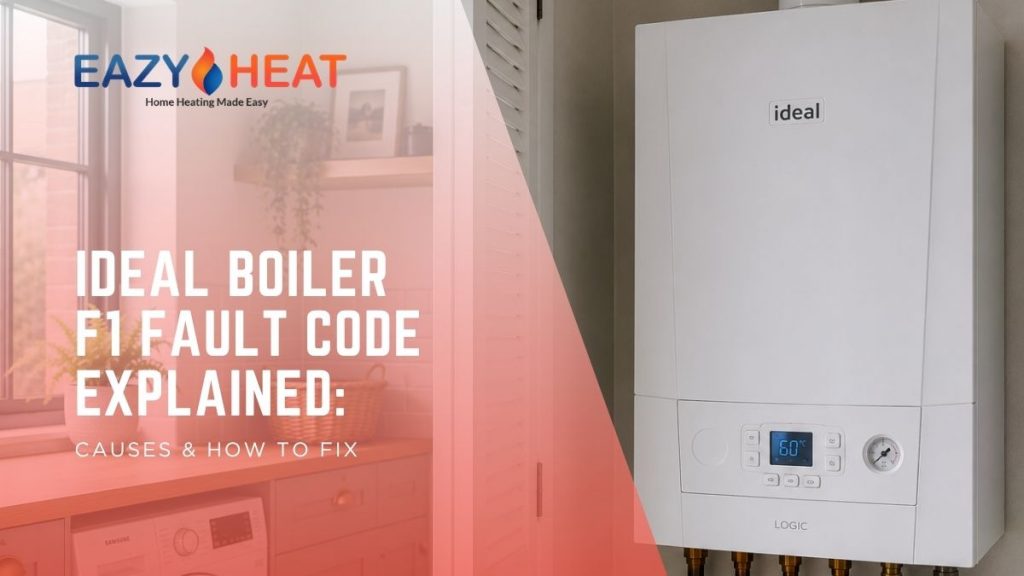

Your Ideal boiler showing the F1 fault code usually means the water pressure in the heating system has dropped too low, causing a safe lockout. This common issue affects many UK homes and often leaves you without heating or hot water until resolved.
What does the Ideal boiler F1 fault code mean?
The Ideal boiler F1 fault code means the system has detected low water pressure, usually below 1 bar. The boiler locks out to protect the pump and heat exchanger from running dry or overheating. You will typically see the pressure gauge reading in the red zone when this happens.
It is one of the most reported faults on Ideal boilers and is often straightforward to address with basic checks.
What causes the F1 fault code on your Ideal boiler?
The F1 fault code on your Ideal boiler is most often caused by low water pressure from leaks, air in the system or gradual natural loss. These issues reduce circulation and trigger the safety lockout.
Normal Pressure Drop or Recent Maintenance
Pressure can drop gradually over time or suddenly after bleeding radiators or other maintenance. Small amounts of water and air escape through joints and valves, lowering the level below the safe operating point. This is the most common reason for the F1 error code in UK homes.
How to Fix
- Locate the pressure gauge on the front of your Ideal boiler. Check the reading when the system is cold. It should be between 1 and 1.5 bar.
- If low, find the filling loop. This is usually a short flexible silver hose with two valves or levers underneath the boiler.
- Turn off the boiler and let it cool. Slowly open both valves while watching the gauge. Add water gradually until the pressure reaches about 1.2 to 1.5 bar. Do not exceed this to avoid over pressurising.
- Close both valves tightly and wipe any drips. Check for leaks around the filling loop.
- Press and hold the reset button on the boiler for several seconds to clear the fault. Run the heating and monitor the pressure for the next few hours. If it drops again quickly, there may be a leak.
Leaks in the Heating System
Leaks from radiator valves, pipe joints, the expansion vessel or the boiler itself cause pressure to fall over time. You might notice damp patches, water stains or higher water bills. Even slow leaks can trigger the F1 code.
How to Fix
- Carefully inspect all visible pipes, radiator connections and the boiler for drips, wet marks or corrosion.
- Feel under radiators and along pipe runs for dampness. Isolate suspect radiators by turning off their valves if needed.
- Top up the pressure temporarily using the filling loop method above to restore heating.
- Call a Gas Safe registered engineer to locate and repair any leaks properly. They will repressurise the system after fixing.
- After repairs, check pressure daily for a week and bleed radiators if air has entered during work.
Blocked or Sludgy System
Sludge, limescale and debris build up inside pipes and the heat exchanger over years, restricting flow and causing pressure related faults. This is more common in hard water areas and unserviced systems. Cold spots on radiators are a typical sign.
How to Fix
- Bleed all radiators thoroughly, starting from the lowest in the house. Collect the water and note if it is dirty or contains sludge.
- Top up the system pressure after bleeding.
- Arrange a professional power flush or chemical clean with a Gas Safe engineer. They will circulate a cleaner, remove debris and refill with fresh water plus inhibitor.
- Ask the engineer to fit a magnetic filter on the return pipe to catch future sludge.
- Reset the boiler, run the heating and schedule annual servicing to keep the system clear.
Persistent pressure faults like the Ideal boiler F1 code often indicate a system that needs more than quick fixes. At Eazy Heat we frequently recommend that UK landlords and homeowners consider a new boiler installation, which can reduce these problems and save money in the long term.
Get your free online boiler quote today, it just takes a few seconds!
When should you call a professional for your Ideal boiler F1 fault code?
You can safely repressurise and bleed radiators yourself, but leaks, system cleans or repeated faults require a Gas Safe registered engineer. They can find hidden problems and make safe repairs.
How to prevent future F1 faults on your Ideal boiler
Check pressure monthly and top up when needed. Bleed radiators seasonally. Annual servicing catches leaks and sludge early. Maintained boilers in the UK have fewer breakdowns and lower running costs, helping households manage energy bills.
Fed Up with Your Ideal Boiler Losing Pressure?
If your Ideal boiler F1 fault code keeps returning, it may be more than just a simple pressure drop. While repressurising the system can often restore your heating temporarily, repeated low-pressure faults are usually a sign of leaks, worn components or an ageing boiler that is becoming increasingly unreliable.
At Eazy Heat, we help homeowners and landlords across the UK replace unreliable boilers with modern, energy-efficient heating systems that are built to last. Our expert installers provide a fast, hassle-free service, and every installation comes with a market-leading 12-year parts and labour warranty for complete peace of mind. Using our online quotation tool, you can receive a fixed boiler replacement quote in just a few minutes with no hidden costs.
Get your free online boiler quote today and see how affordable it is to upgrade to a reliable new boiler with Eazy Heat, giving you dependable heating and hot water for years to come.
FAQs
How often should I check boiler pressure to avoid F1 errors?
Check monthly and after bleeding radiators or any maintenance work.
Can hard water cause more F1 faults?
Yes, it leads to faster sludge and limescale build up that restricts flow. Inhibitors and regular servicing help.
Will a new boiler completely stop F1 type errors?
Modern boilers handle pressure more effectively and have better diagnostics, greatly reducing these faults with proper care.
Is it safe to keep topping up pressure for an F1 code?
Temporary top ups are fine, but repeated drops mean there is likely a leak that needs professional repair.
What should landlords do if tenants report an F1 error?
Arrange prompt repairs to maintain safety and comfort. An upgrade may be a good investment for long term reliability.