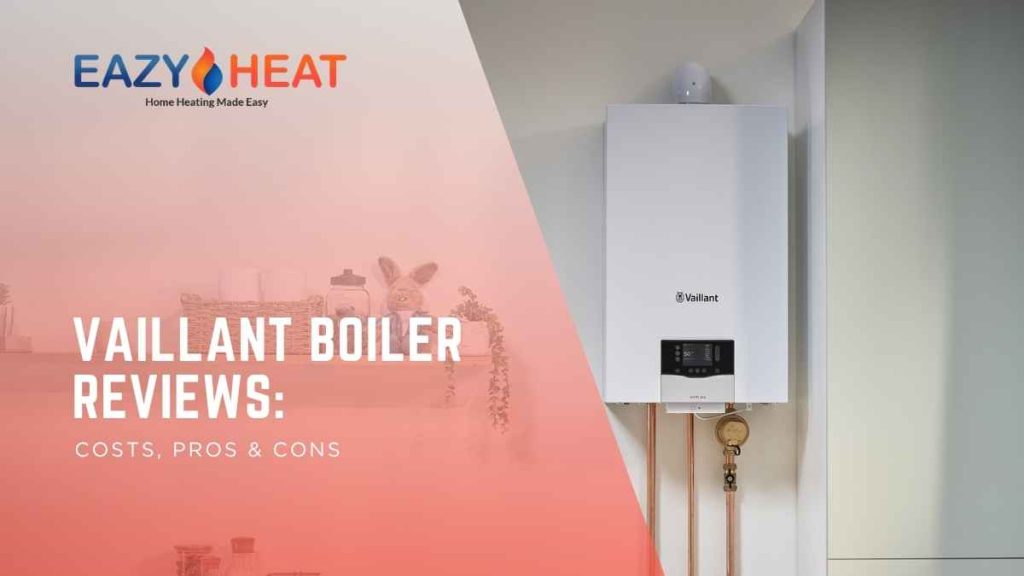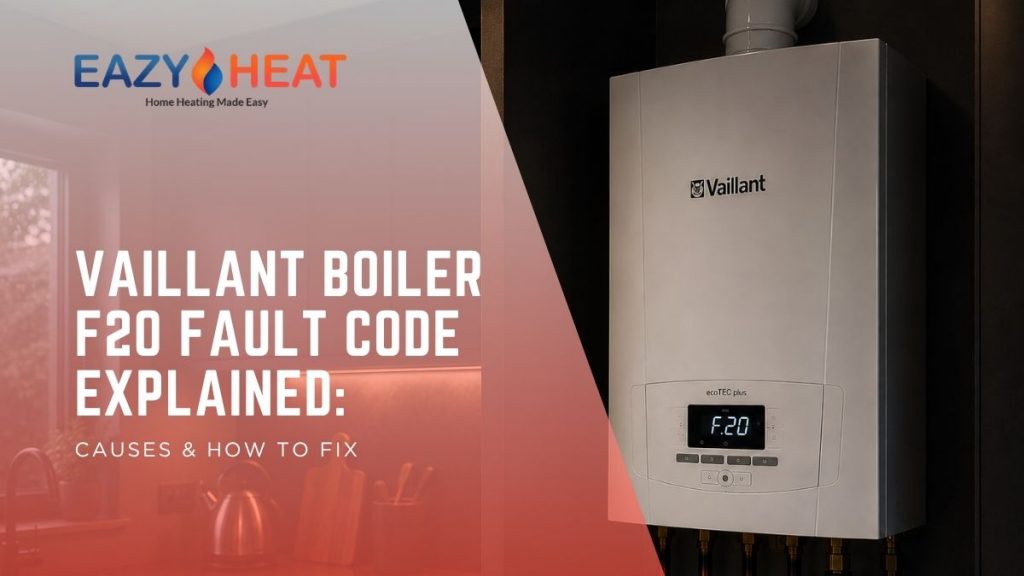

The Vaillant boiler F20 fault code appears when your boiler detects temperatures rising too high inside the system. This safety lockout stops the unit to prevent damage and leaves you without heating or hot water until resolved.
What does the Vaillant boiler F20 fault code mean?
The Vaillant boiler F20 fault code means your boiler has overheated and triggered a safety shutdown. The system senses water temperatures climbing beyond safe limits usually around 97 degrees Celsius and locks out to protect internal parts and your home.
What causes the F20 fault code on your Vaillant boiler?
Several everyday problems can trigger the F20 fault code on your Vaillant boiler. The main ones relate to poor water circulation that stops heat from moving away properly faulty sensors or build up inside the system. Low pressure air in the pipes or a struggling pump often sit at the heart of it too.
Persistent error codes like the F20 can signal deeper wear in your heating setup. At Eazy Heat we see many customers reach this point and realise that investing in a new boiler saves money over time compared with repeated repairs.
Get your free online boiler quote today.
Low System Water Pressure
Low system water pressure causes the F20 error code by reducing water flow through the heat exchanger. When pressure drops too low, usually below one bar the water moves slowly or not at all. Heat builds up quickly inside the boiler instead of spreading to your radiators.
This happens from small leaks of natural water loss over months or after bleeding radiators without topping up. It appears more in older systems or homes where maintenance has been missed.
How to Fix
- Locate the pressure gauge on the front of your boiler and note the reading when the system feels cold.
- If it sits below one bar, find the filling loop, usually two flexible hoses underneath the boiler.
- Open both valves slowly while watching the gauge until it reaches around 1.2 to 1.5 bar then close them tightly.
- Bleed air from all radiators starting upstairs to remove any air introduced during filling.
- Press the reset button on the boiler and allow it to run through a full cycle while monitoring pressure.
- Check the gauge daily for the next week. A repeated drop means a hidden leak needs professional attention.
- If pressure holds, call a Gas Safe engineer only if the fault returns after these steps.
Faulty Circulation Pump
A faulty circulation pump triggers the F20 fault when it cannot push water around the system effectively. The pump may run weakly, seize up completely or get blocked with sludge. Without good flow heat stays trapped inside the boiler and temperatures climb dangerously.
This issue builds over years especially in systems without regular servicing or in homes with hard water that encourages debris.
How to Fix
- Listen carefully near the pump when the boiler tries to start. A healthy pump makes a quiet humming sound.
- Bleed all radiators thoroughly to clear any air that might be making the pump work harder.
- Top up system pressure if low following the steps above.
- Reset the boiler and test heating on a high setting for twenty minutes.
- If the pump stays silent or the fault returns book a Gas Safe engineer visit.
- The engineer tests the pump electrically and for flow then replaces it with a suitable model if needed.
- They flush the system, add an inhibitor chemical and balance the radiators afterwards for even heat.
Blocked or Scaled Heat Exchanger
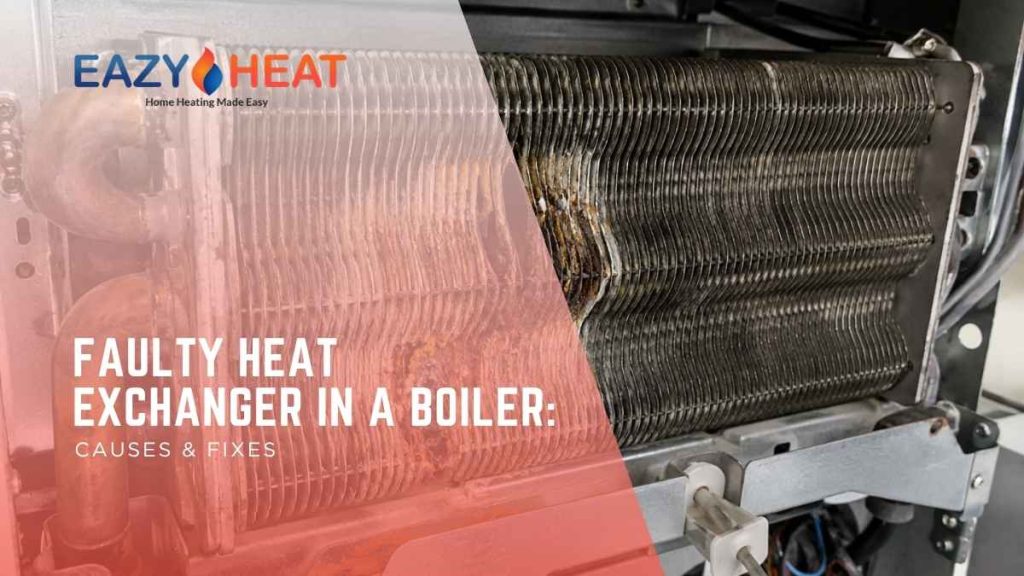
A blocked or scaled heat exchanger leads to the F20 code by stopping efficient heat transfer. Limescale and sludge build up inside especially in hard water areas and create hot spots. The water cannot absorb and carry heat away fast enough so the boiler overheats.
Kettling noises like a rumbling kettle often accompany this problem.
How to Fix
- Note any unusual noises when the boiler runs and check pressure levels first.
- Bleed radiators and repressurise if needed as a temporary measure.
- Do not attempt internal cleaning yourself.
- Arrange a professional service with a Gas Safe engineer.
- The engineer performs a power flush or chemical clean to remove scale and debris.
- They inspect the heat exchanger closely and replace it if damage is severe.
- After cleaning they test temperatures throughout a full heating cycle and provide maintenance advice.
If the F20 code returns often despite these efforts your current Vaillant boiler may benefit from replacement. Many homeowners and landlords we support at Eazy Heat choose this route for fewer headaches ahead.
How to prevent future F20 fault codes on your Vaillant boiler
Preventing the F20 fault code on your Vaillant boiler starts with maintaining good water circulation throughout your heating system. Since this fault is usually caused by overheating due to poor flow, low pressure, or internal blockages, routine maintenance can significantly reduce the risk of future lockouts.
Follow these steps to help prevent the F20 fault code from returning:
- Book an annual boiler service with a Gas Safe registered engineer to inspect the circulation pump, heat exchanger, sensors, and other safety components.
- Keep your boiler pressure between 1 and 1.5 bar when the system is cold, checking the pressure gauge regularly and topping it up when necessary.
- Bleed your radiators regularly to remove trapped air that can restrict water flow and contribute to overheating.
- Keep the heating system clean by installing a magnetic filter and ensuring inhibitor is added after a system flush to reduce sludge and corrosion.
- Arrange a power flush if required, particularly if your radiators have cold spots or your boiler makes kettling or rumbling noises, as these are signs of sludge or limescale build-up.
- Investigate unusual pump noises or poor heating performance promptly, as a failing circulation pump can quickly lead to overheating.
- Avoid repeatedly resetting the boiler if the F20 fault reappears, as this will not resolve the underlying problem and may cause additional damage.
- Address small pressure drops or leaks early, since insufficient water pressure can reduce circulation and increase the likelihood of overheating.
Regular servicing and early maintenance are the best ways to prevent the Vaillant boiler F20 fault code while keeping your heating system operating safely and efficiently. If the fault continues despite maintaining the correct pressure and servicing the system, a Gas Safe registered engineer should carry out a full inspection.
For older boilers that repeatedly overheat, replacing the appliance with a modern, energy-efficient model may prove to be the most reliable and cost-effective long-term solution.
Replace an Overheating Boiler Before It Lets You Down Again
If your Vaillant boiler keeps displaying the F20 fault code, recurring overheating problems can be a sign that major components are wearing out. While repairs may resolve the issue temporarily, ongoing call-outs, replacement parts and unexpected breakdowns can soon become more expensive than investing in a modern, energy-efficient boiler.
At Eazy Heat, we make boiler replacement quick and hassle-free for homeowners and landlords across the UK. From your initial enquiry through to professional installation, our experienced team takes care of everything, ensuring you have reliable heating and hot water with minimal disruption. Every new boiler installation is backed by a market-leading 12-year parts and labour warranty, giving you complete peace of mind for years to come.
Finding out how much a replacement will cost couldn’t be easier. Simply use our online boiler quotation tool to receive a clear, fixed-price quote in just a few minutes. Once you’re ready to go ahead, we’ll arrange a convenient installation date and have your new boiler up and running as quickly as possible.
If your current Vaillant boiler is suffering from repeated overheating faults, replacing it with a new, more efficient model from Eazy Heat could save you money on repairs, lower your energy bills and provide dependable heating for years to come.
FAQs
How dangerous is a Vaillant F20 fault if ignored?
Continuing to reset without fixing the cause can lead to further damage or inefficiency. It is safest to get it checked promptly to protect your home and family.
Does hard water increase the chance of F20 faults?
Yes, areas with hard water see more scale related overheating. Fitting a scale reducer or choosing a boiler suited to your water type helps prevent this.
Can I prevent F20 faults with regular maintenance?
Absolutely. Annual Gas Safe servicing catches circulation and sensor issues early. It often pays for itself through better efficiency and fewer breakdowns.
Will a new boiler eliminate F20 style problems?
Modern boilers have improved sensors, better pumps and self diagnostics that reduce overheating risks significantly. Many customers report far fewer faults after upgrading.
What should landlords do when tenants report a Vaillant F20 code?
Arrange a professional inspection quickly to meet safety standards and keep tenants comfortable. Eazy Heat offers flexible options for rental properties including full replacements where suitable.